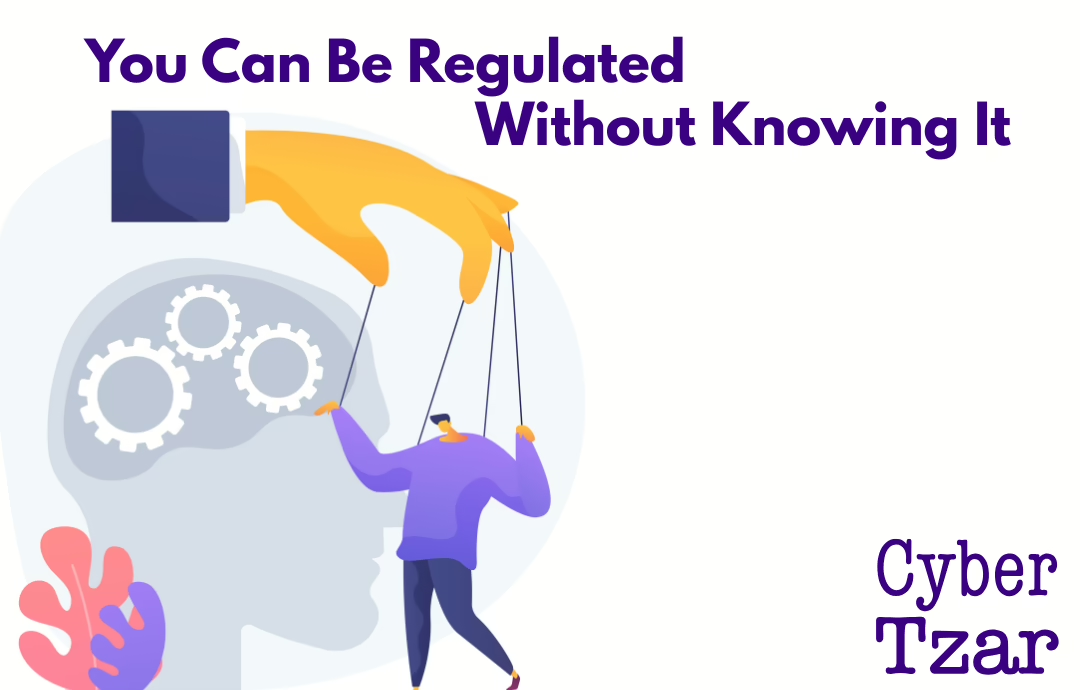
“Designation-by-Dependency”: Why You Can Be Regulated Without Knowing It
Most organisations assume regulation starts with a form, a registration process, or at least a letter telling them they are now “in scope”.
Under the UK Cyber Security and Resilience Bill, that assumption is wrong.
One of the most underappreciated features of the Bill is that regulation can attach to you because of who depends on you, not because of what you call yourself. This is not self-identification. It is designation-by-dependency.
Regulation no longer starts with your size or sector
Under the original NIS Regulations, organisations were largely regulated because they operated in clearly defined sectors: energy, transport, health, water, digital infrastructure. You generally knew where you stood.
The new Bill changes that logic.
It introduces the concept of critical suppliers: organisations whose disruption could significantly affect essential services, managed services, or relevant digital services. Crucially, there is no minimum size requirement and no obligation for a supplier to volunteer itself for regulation.
If your failure would materially impact a regulated organisation, you can be designated — regardless of whether you see yourself as “critical”.
How designation-by-dependency works in practice
Most SMEs do not sit at the top of supply chains. They sit inside them.
You might:
-
Provide managed IT, cloud, data, security or operational services
-
Support defence, infrastructure, health, energy or regulated MSPs
-
Be one of several suppliers whose combined failure would cause disruption
-
Operate tooling, platforms or access that customers cannot easily replace
In these cases, regulators don’t need you to self-declare. They can designate you because your customers rely on you.
This is where most organisations underestimate the risk:
they assess their own importance, not the impact of their failure on others.
Why this creates real discovery risk
Designation-by-dependency creates a timing problem.
You may only discover that you are considered “critical”:
-
when a customer is regulated and flags you,
-
when a regulator assesses a supply chain,
-
or when an incident exposes your role in disruption.
At that point, the obligations apply immediately:
-
24-hour incident notification
-
72-hour detailed reporting
-
mandatory customer notification
-
regulatory information requests
-
potential cost recovery charges
There is no long runway to prepare once designation happens.
The uncomfortable question boards now have to ask
The Bill forces a reframing of cyber risk from an internal control problem to a downstream impact problem.
The real question is no longer:
“Are we regulated?”
It is:
“If we failed tomorrow, who would feel it — and how badly?”
If the answer includes regulated entities, essential services, or large MSPs, then regulation may already be closer than you think.
Why traditional supplier assurance isn’t enough
Most organisations rely on:
-
questionnaires,
-
certifications,
-
contractual clauses,
-
or annual reviews.
These focus on your controls, not on how risk propagates through dependency.
Regulators care less about whether you have a policy, and more about:
-
how quickly incidents surface,
-
whether customers are informed,
-
whether failures cascade,
-
and whether risk was foreseeable.
That requires understanding how you contribute to supply-chain risk, not just how you manage your own perimeter.
What organisations should do now
You do not need to panic — but you do need clarity.
Practical first steps include:
-
Mapping which customers would be materially impacted by your failure
-
Identifying where your services aggregate risk across multiple clients
-
Understanding whether your customers are already regulated or likely to be
-
Stress-testing whether you could meet reporting and notification duties in reality
This is fundamentally a supply-chain risk problem, not a compliance paperwork exercise.
Why this matters commercially, not just legally
Under the new regime, cyber incidents become disclosed, customer-facing events.
Being unprepared doesn’t just create regulatory risk — it creates trust risk.
Organisations that can clearly explain:
-
how they manage dependency risk,
-
how they limit blast radius,
-
and how they would respond under pressure,
will be more attractive suppliers as regulation tightens.
Those that can’t will feel the consequences first through procurement, contracts and customer confidence — long before fines ever appear.
Call to action
The Bill is coming. Designation-by-dependency is already here.
If you want to understand how your organisation contributes to supply-chain cyber risk — and how exposed you may be without realising it — contact Cyber Tzar today to learn how we can help you assess your supply chain risk now, before regulation or incidents force the issue.