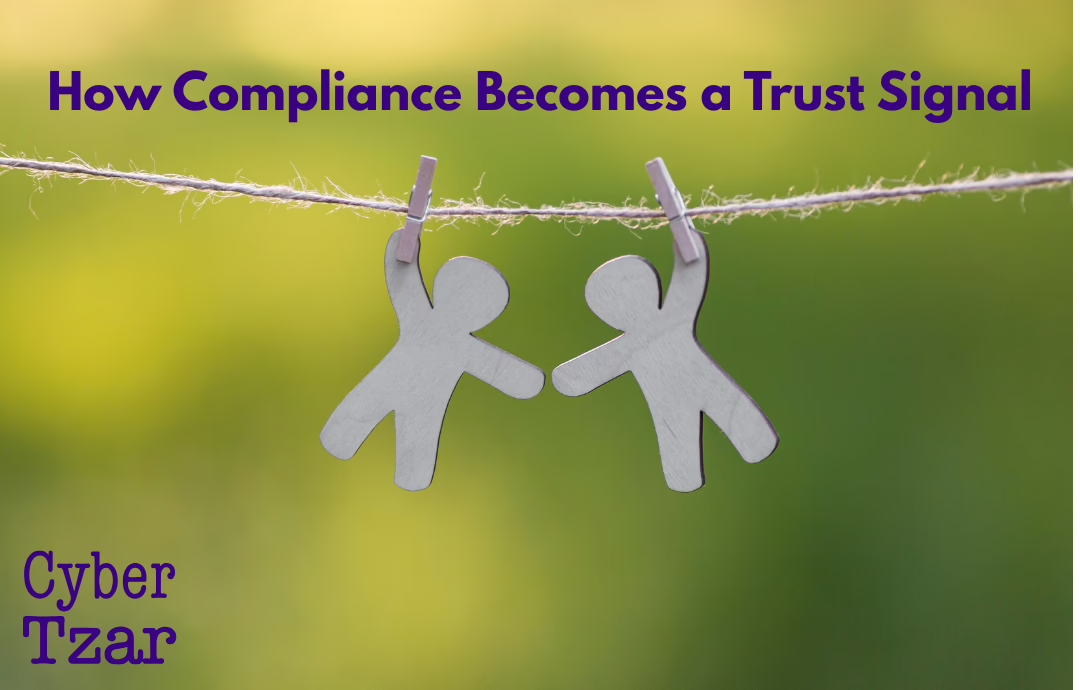
Turning Compliance into a Trust Signal: How Cyber Resilience Becomes a Differentiator
For many organisations, the Cyber Security and Resilience Bill feels like another compliance burden.
For a smaller number, it will become a competitive advantage.
The difference is not budget or size.
It is whether resilience is treated as proof of trust, not just proof of compliance.
Why compliance is no longer invisible
Historically, cyber compliance was largely internal:
-
policies filed,
-
audits passed,
-
regulators satisfied.
Customers rarely saw it, and rarely cared.
That changes under the new regime.
Mandatory incident reporting, customer notification duties and direct regulation of suppliers mean cyber resilience now shows up:
-
in contracts,
-
in procurement decisions,
-
in customer confidence,
-
and in how incidents are experienced externally.
Resilience becomes observable.
Why trust is the real currency
Under the Bill, customers care less about whether you are “perfect” and more about whether you are:
-
transparent,
-
predictable,
-
and operationally honest under pressure.
Organisations that can:
-
explain their role in the supply chain,
-
demonstrate readiness,
-
and communicate clearly during incidents,
will be trusted more than those with impressive certifications but poor response discipline.
What trust signals actually look like
Trust does not come from slogans or badges.
It comes from behaviour.
Under the new regime, strong trust signals include:
-
clear articulation of dependency and criticality,
-
realistic incident response commitments,
-
defined customer notification processes,
-
and evidence of rehearsed decision-making.
These are things customers, partners and regulators can test — implicitly or explicitly.
Why early movers gain an edge
Organisations that engage early can:
-
shape conversations with customers,
-
influence contractual expectations,
-
and set realistic standards before they are imposed.
They move from being assessed to being relied upon.
Late adopters are forced into reactive compliance, often under incident pressure, where trust is hardest to earn.
The supplier perspective: trust works both ways
For suppliers, the Bill exposes a second trust question:
-
Can customers rely on you not to become their regulatory problem?
Suppliers who can demonstrate:
-
proportionate controls,
-
dependency awareness,
-
and credible response capability,
reduce friction in procurement and due diligence.
Compliance becomes shorthand for reliability.
Why this matters most to SMEs
SMEs rarely win on scale.
They win on credibility.
The Bill levels part of the playing field by making resilience a baseline expectation — but it also rewards SMEs who:
-
are clear about what they do,
-
honest about what they don’t,
-
and disciplined about how they manage risk.
In a regulated supply chain, that matters more than marketing claims.
The uncomfortable truth
You cannot retrofit trust during an incident.
When reporting clocks start and customers are notified, your posture is revealed — whether you prepared or not.
Compliance done early becomes reassurance.
Compliance done late becomes explanation.
The practical takeaway
Cyber resilience is no longer just about avoiding penalties.
It is about earning confidence — from customers, partners and regulators — in how you operate under stress.
Those who understand this will turn regulation into leverage.
Call to action
If you want compliance to strengthen trust — rather than expose weakness — you need to understand how your cyber posture appears to customers and partners under the new regime.
Contact Cyber Tzar to assess your supply-chain risk, incident readiness and dependency profile — and turn cyber resilience into a trust signal, not a scramble.