UK universities are under increasing pressure to demonstrate not just academic excellence — but cybersecurity compliance. Whether applying for funding, managing student data, or partnering with industry and government, institutions must now prove they can safeguard digital assets and personal information.
The challenge? Most universities juggle a mix of legacy systems, federated IT, and diverse user needs — making compliance harder to define, track, and demonstrate.
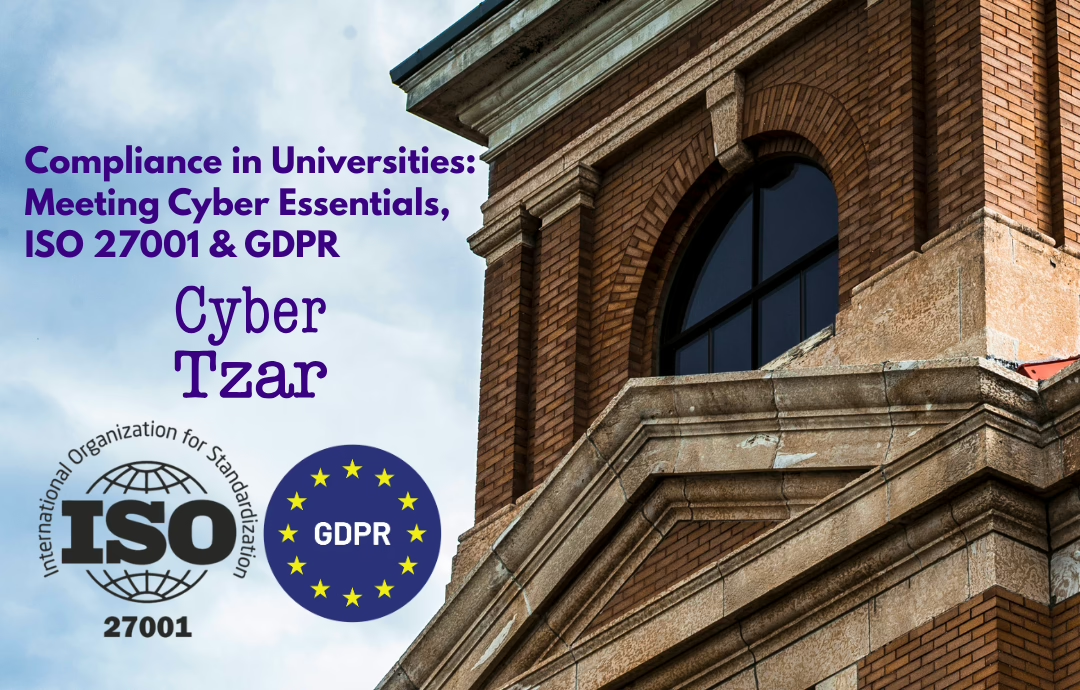
This article outlines how higher education institutions can navigate three key frameworks: Cyber Essentials, ISO 27001, and GDPR — and how to make them work together.
Why Compliance Is Now Essential
🎯 Funders are asking – UKRI, Innovate UK, and Horizon Europe increasingly require evidence of cyber maturity
🔗 Partners are demanding assurance – Especially in defence, health, and commercial research sectors
🧑🎓 Students and staff expect protection – Universities are data custodians and must earn digital trust
📑 Regulators are enforcing fines – GDPR breaches have already cost institutions dearly in both money and reputation
Compliance isn’t a box-ticking exercise — it’s now central to operational risk and strategic reputation.
Understanding the Big Three Frameworks
🛡️ Cyber Essentials
A UK government-backed baseline standard. Covers 5 technical controls:
-
Firewalls
-
Secure configuration
-
Access control
-
Malware protection
-
Patch management
Why it matters:
-
Required for many public sector contracts
-
Quick wins for baseline protection
-
Signals seriousness to stakeholders
📋 ISO 27001
The international gold standard for information security management systems (ISMS). Focuses on:
-
Asset inventory
-
Risk assessments
-
Policies and procedures
-
Security roles and responsibilities
-
Continual improvement
Why it matters:
-
Recognised globally across academia and industry
-
Demonstrates maturity and governance
-
Essential for long-term research partnerships
🔐 GDPR
The UK’s data protection law. Covers:
-
Lawful processing of personal data
-
Data minimisation and access control
-
Breach notification
-
Subject access rights
-
Data Protection Impact Assessments (DPIAs)
Why it matters:
-
Legal requirement
-
Applies to all personal data — staff, students, alumni
-
Regulators are watching
Three Ways to Align All Three Frameworks
-
Create a unified risk register
Map risks that apply across Cyber Essentials, ISO, and GDPR — and assign clear ownership. -
Use vulnerability scanning to generate evidence
Tools like Cyber Tzar help demonstrate patching practices, access control, and firewall configurations. -
Involve multiple teams early
IT, governance, academic leads, and legal must collaborate — especially on supplier assessments and data flows.
How Cyber Tzar Helps Universities Manage Compliance
Cyber Tzar supports institutions working across all three frameworks with:
✅ Real-time vulnerability scanning
✅ Supplier and third-party risk assessments
✅ Sector benchmarking and peer comparison
✅ Audit-ready reports aligned to Cyber Essentials and ISO 27001
✅ GDPR-aligned visibility into data access and system exposure
🎓 Need help aligning your compliance efforts across frameworks?
Get a tailored scan and roadmap at cybertzar.com